Fitness case study
7-Minute Workout: Building a Fitness App for People Who "Don't Have Time to Work Out"
Quick Daily Fitness App (React Native)
Client
Personal Project
Role
Lead mobile developer — React Native fitness flows end to end
Timeline
Concept through guided workout flows (~3–4 months)
Platform
iOS & Android
Framework
React Native + TypeScript
Category
Health & Fitness / No-Equipment Workouts
Rep
~7 min
Core session length
Rep
0 gear
Bodyweight-only circuits
Rep
RN
iOS + Android codebase
Workout tour
From home and library through timer, demos, and streak history.
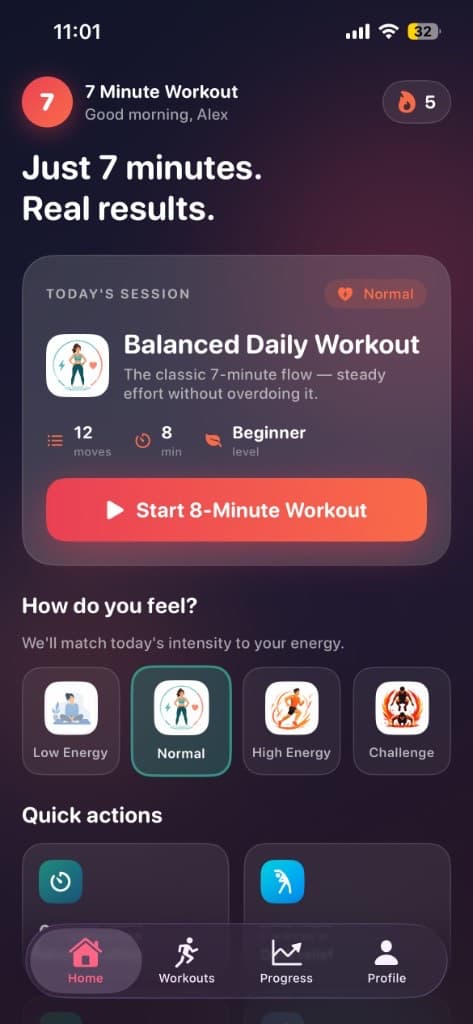
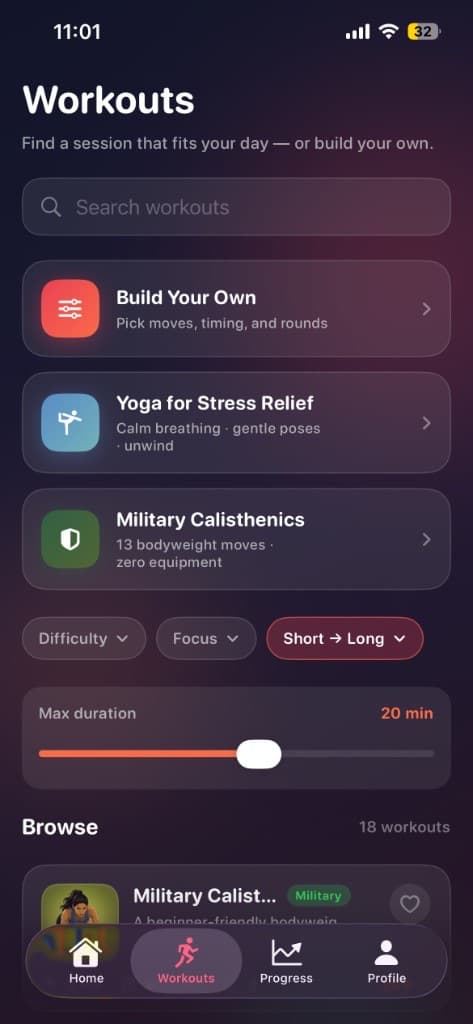
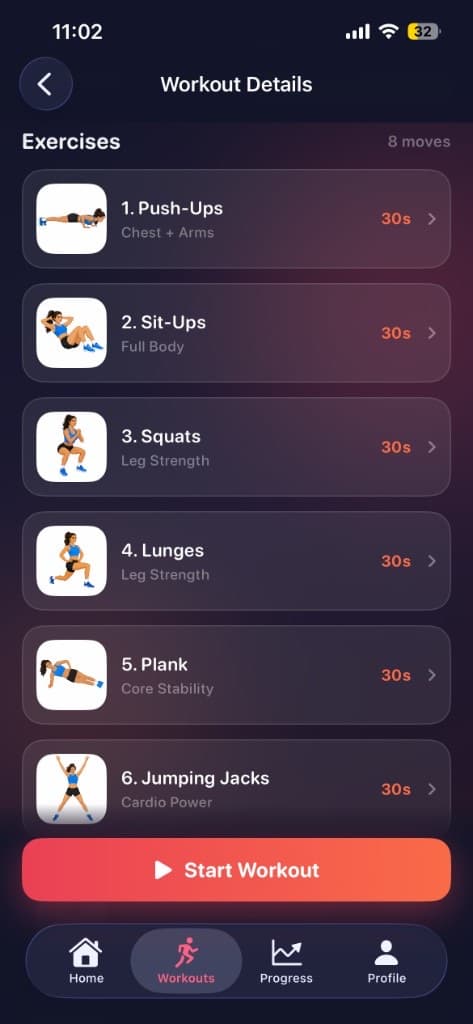
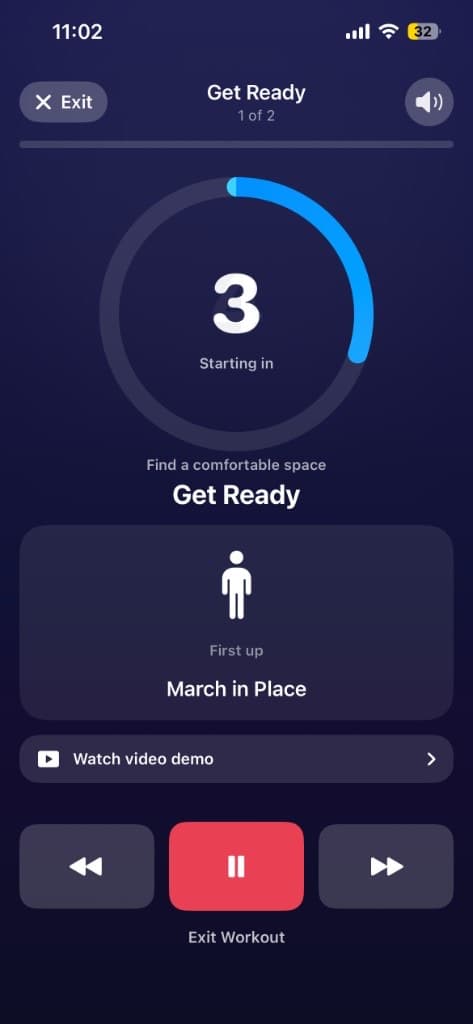
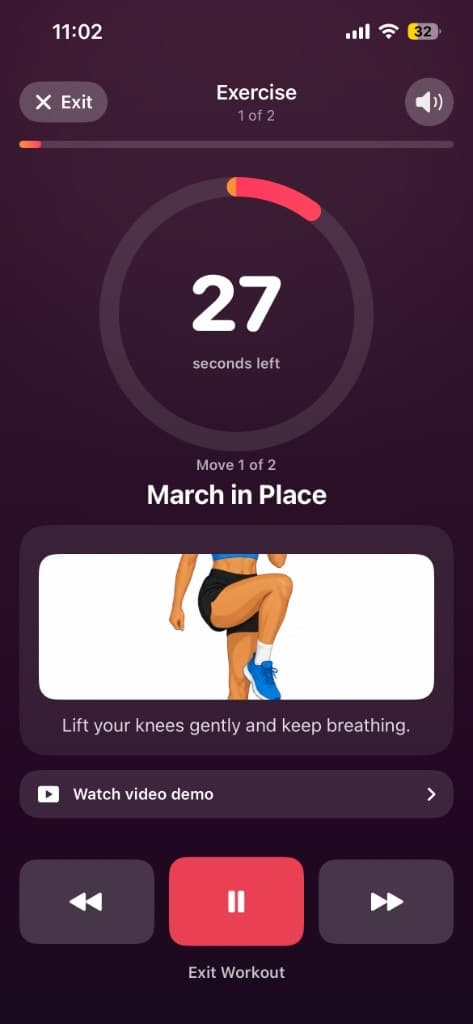
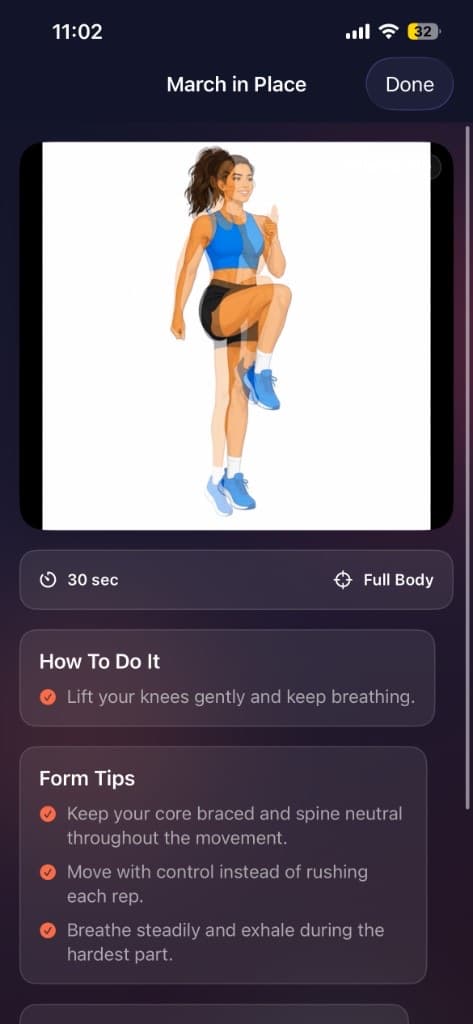
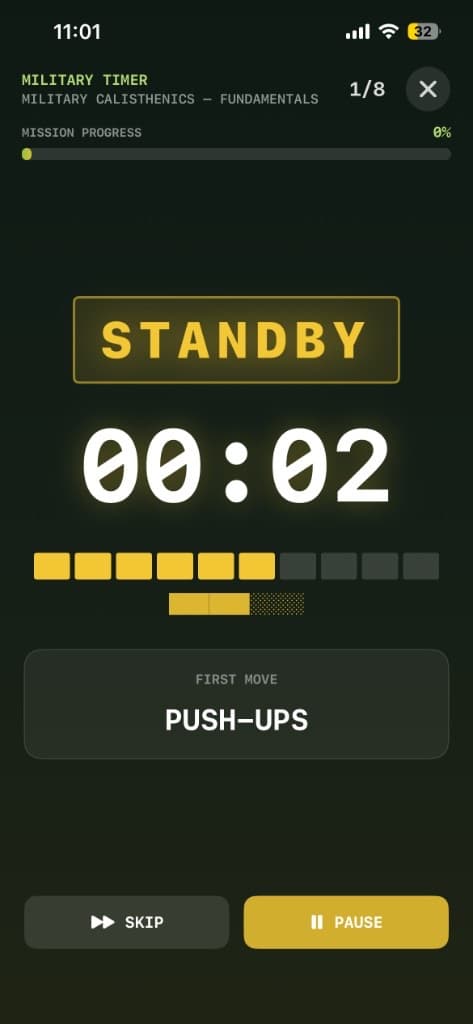
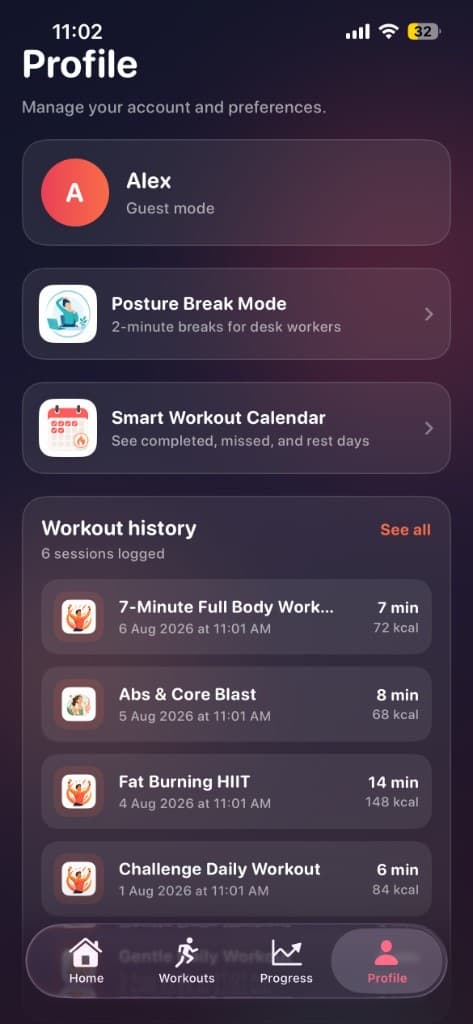
App tour — home & energy picker, workout library, exercise list, get-ready countdown, active timer with demo, exercise form tips, military timer, and profile streaks.
Overview
Strip away every excuse — make the workout take less time than scrolling social media.
Most fitness apps are built for people who already work out. Long program plans, gym equipment lists, progressive overload tracking — genuinely useful, but completely useless to the much bigger group of people who don't exercise at all because they've convinced themselves they don't have time.
This app was built for that second group. It's a 7-minute workout app based on a well-known high-intensity circuit training format — the same style of workout the New York Times once described as delivering "maximum results with minimal investment." The entire product philosophy came from that idea: strip away every excuse, and make the workout itself take less time than scrolling through social media.
The problem
Talking to people who don't work out regularly, the barrier was almost never motivation in the abstract — it was time, or the perception of needing time.
- Most fitness apps assumed users already had 45–60 minutes and gym access, which immediately excluded the exact people most likely to benefit from starting a habit
- Complex program structures (weeks, phases, progressive plans) felt intimidating to someone who hadn't exercised in months or years
- Existing "quick workout" content on YouTube or elsewhere required searching every time, with no consistent structure or built-in timing
- There was no simple, no-equipment option that could genuinely be done "anytime, anywhere" — at a desk, in a hotel room, between meetings
Designing Around the Core Constraint: Time
Round 01
7 minutes as a design constraint, not a marketing slogan
The HICT format uses bodyweight moves at high effort for short intervals with minimal rest, cycling the full body in a fixed sequence. The duration isn't arbitrary — it's built from a specific exercise count at a specific interval length.
Round 02
Zero-setup start
The core workout screen had to work with no configuration — open the app, hit start, go. Account creation and non-essential setup wait until after the first completed session.
Round 03
No equipment, built-in timing
Bodyweight-only circuits plus a background-safe timer and audio cues so users don't need gym access, a second device, or constant screen watching.
Architecture & tech stack
The app is a React Native guided-workout product centered on low-friction sessions. Home surfaces today's session and energy-matched intensity. A workout library supports search, filters, military calisthenics, wellness sessions, and custom “Build Your Own.” Starting a workout moves through get-ready countdown → timed active exercise with demo → next interval, with audio cues keeping pace when the screen isn't watched. Exercise detail screens carry form tips and muscle targets. Profile keeps guest-friendly history, calendar, and streak without forcing signup before value.
| Category | Tools / tech |
|---|---|
| Mobile framework | React Native + TypeScript for iOS and Android from one codebase |
| Timer engine | Precise interval timing with background audio cue support so workouts stay accurate if the screen locks or the user briefly switches apps |
| Backend | Fully on-device core experience — no mandatory account or network dependency to start a workout |
| Local storage | On-device workout history, calendar, and streak tracking so habit features work offline and in guest mode |
| Audio | Voice cues and interval chimes timed to exercise and rest transitions |
| Media | Guided demos and per-exercise form tips (duration, muscle targets, how-to steps) |
| Notifications | Optional reminders and posture-break mode for consistency outside the core circuit |
| Category | Health & fitness, no-equipment workouts |
Key features
Pick a drill — tap to switch.
One-tap workout start
No setup screens or equipment selection — open the app and today's session is one tap away at the moment motivation is highest.
Engineering challenges & solutions
Solution
Used platform-level background audio session handling so the interval timer and cues keep running accurately in the background, rather than a foreground-only timer that pauses when the screen locks.
Results
- Shipped a React Native fitness product for iOS and Android around a seven-minute guided circuit core
- End-to-end flow documented: home → library / details → get ready → timed exercise with demos → profile history & streaks
- Guest-friendly progress (calendar + history) so habit tracking works without mandatory signup
- Military calisthenics and wellness paths plus custom “Build Your Own” for users who outgrow a single default circuit
What I’d do differently
- I would surface beginner/advanced difficulty variations earlier — real fitness levels vary more than a single default circuit implies.
- Onboarding could still shed friction based on where first-session drop-off actually happens.
- Apple Health / Google Fit integration deserves earlier investment so the app meets people where they already track activity.
Frequently Asked Questions
Building a fitness or habit app where low friction is the product?
Book a free consultation or message on WhatsApp — bring your session length, timer requirements, and where users currently drop before their first workout.
Prefer a quick jump? Start on the ads landing page or return to portfolio.